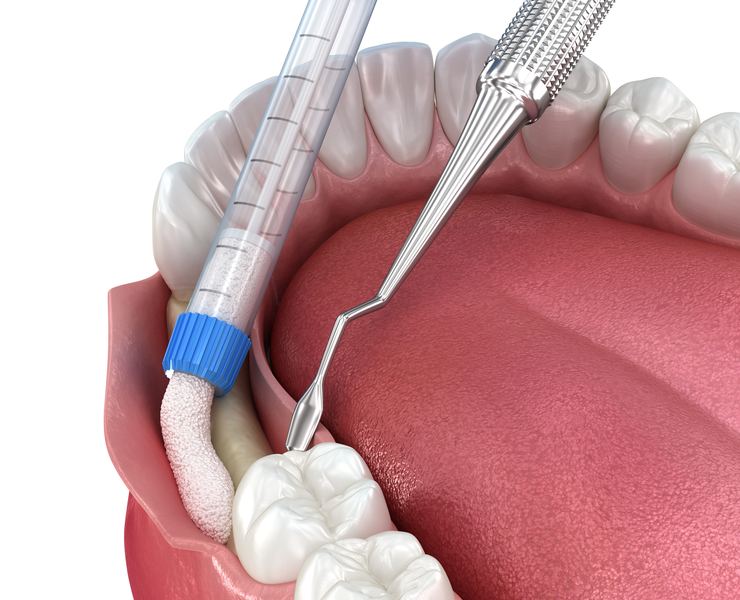
Your sinuses sit just above the roots of your upper back teeth. When those teeth are lost, the bone underneath can shrink and the sinus can drop lower, leaving too little bone for an implant.
A sinus lift, also called a sinus augmentation, gently raises the floor of the sinus and adds bone graft material underneath it. Once that bone has healed, there is enough height to hold an implant securely.
A sinus lift may be part of your plan if:
Not everyone needs a sinus lift. Some full-arch options use angled implants to avoid the sinus. A scan at your free consultation shows whether you need one.
How a sinus lift makes room for an implant in your upper jaw.
Nervous about treatment? Ask about sedation options.
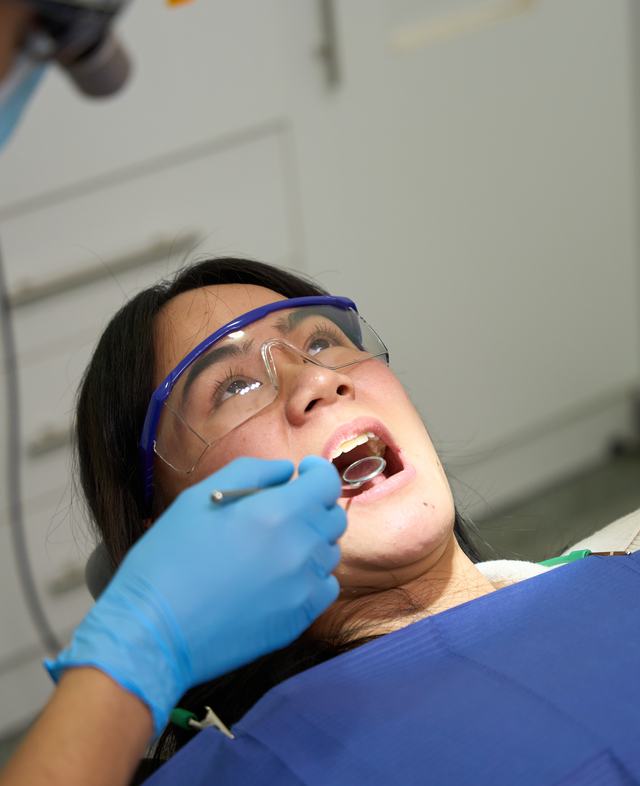
We look at your upper back teeth and gums and explain why a sinus lift may be needed.
Digital imaging measures the bone and shows exactly where your sinus sits.
The sinus floor is gently raised and bone graft material is placed beneath it.
When the new bone under the sinus is solid, usually after a few months, the implant can go in. Some patients have both at once.
Expect some swelling and tenderness for a few days. Because the sinus is close by, take extra care while it heals and follow the instructions we give you:
YOUR NEW TEETH?