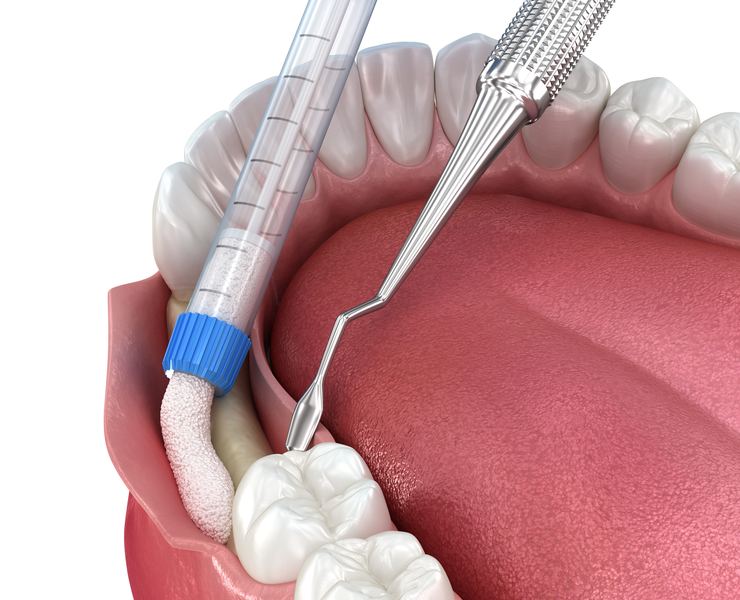
After a tooth is lost, the jawbone in that spot can slowly shrink. If there is not enough bone left, an implant has nothing solid to hold on to. A bone graft adds bone where it is thin, so it can support an implant.
Bone grafting is a common, well-established part of implant treatment. Grafting material is placed where bone is needed, and over time your body grows new bone into it. It can often be done at the same visit as an extraction, and sometimes at the same time as the implant.
A bone graft may be part of your plan if:
Grafting is not always needed: some full-arch options are designed to use the bone you already have. Imaging at your free consultation shows what is right for you.

How a bone graft builds a solid base for your implant.
Nervous about treatment? Ask about sedation options.
We find out which teeth you want to replace and whether the bone there can hold an implant.
Digital imaging measures your bone, so we know exactly where more is needed.
Grafting material is placed where the bone is thin, often at the same visit as an extraction.
As new bone grows into the graft, your implant is placed, in some cases at the same time.
A bone graft heals over a few months as new bone forms. Most people have only mild soreness for a few days. We give you clear instructions to follow at home, including:
A STRONG FOUNDATION?